
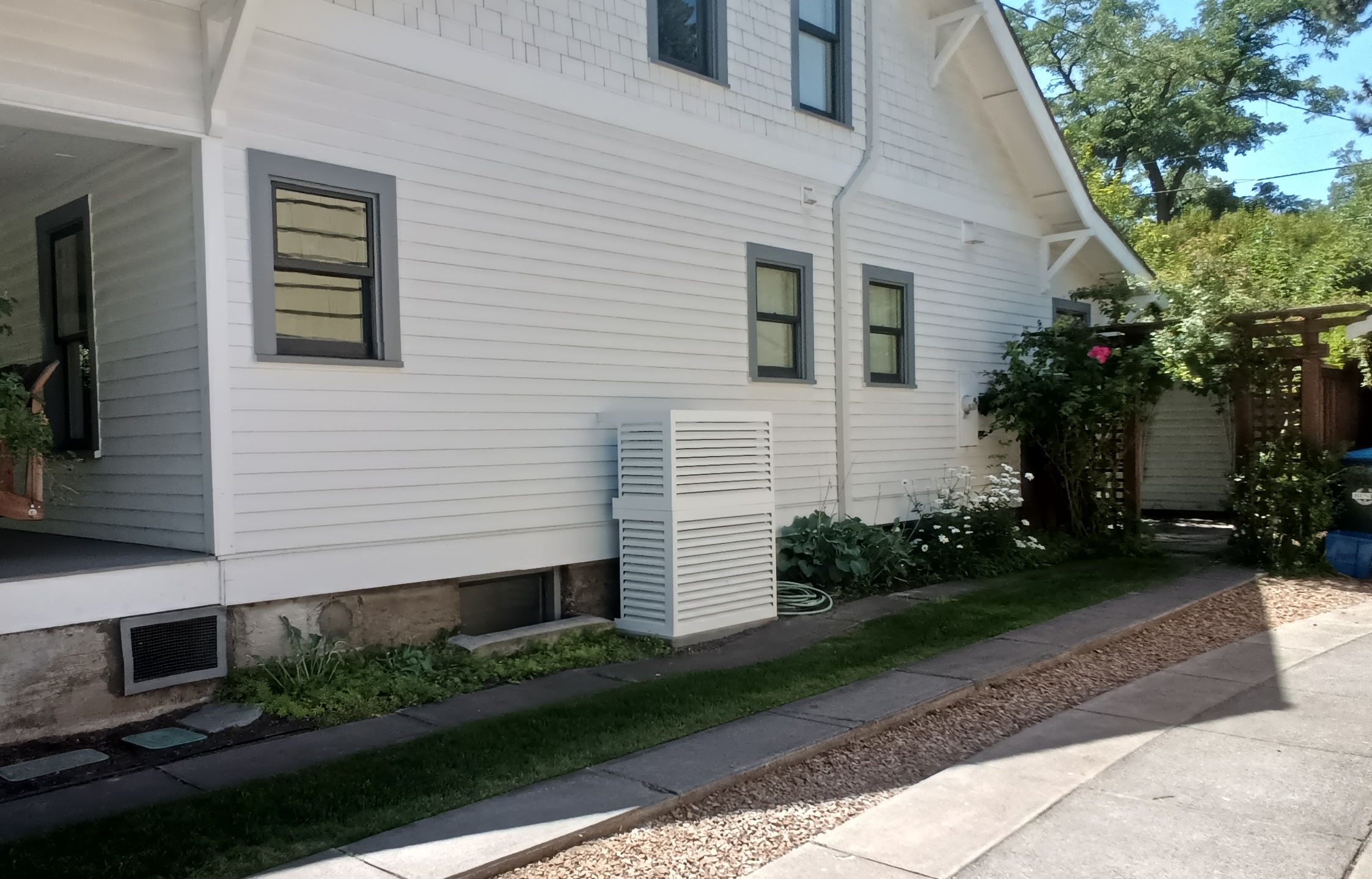
Heat pumps—all-electric heating-and-cooling devices—are a two in one package. They don’t just efficiently heat homes in winter; they also maintain comfortable, cool indoor temperatures during the heat of summer. Read about one Oregonian who convinced her landlord to install a heat pump after the record heat and unprecedented wildfires of 2020.
Across Oregon, the summer of 2020 felt nearly apocalyptic. In the aftermath of the fires that engulfed the state on Labor Day weekend, the skies turned orange with smoke and the heat was oppressive. For Megan Cummings, it was a breaking point. She and her partner were renting a home in Bend, Oregon, where they had no air conditioning. Each day, they’d spend hours in local coffee shops to get a break from the heat and avoid breathing in smoke.
Megan, who has spent the past ten years working as a Senior Home Energy Consultant for sustainable HVAC contractor GreenSavers, knew that she and her partner didn’t have to live like this. That year, she convinced her landlord to install a heat pump.
A heat pump is no ordinary central air conditioning system. On hot summer days, these devices use water vapor to capture heat from inside, then pump that heat outside. In the winter, they do the opposite — even on frigid days, heat pumps can capture heat from the air outside and pump it into our homes. Because these devices move heat rather than generate it, they use a fraction of the energy of a traditional HVAC system. Heat pumps are two to three times more efficient than traditional central air conditioning and fossil-fuel heating systems. They generate less of the climate pollution that fuels extreme heat and wildfires while slashing energy bills.
“You get twice the system, and a much more efficient system,” Megan said.
Megan and her partner went into the summer of 2021 with a brand new setup in their apartment: a mini split, or ductless heat pump. These units are typically mounted high on the wall, indoors. Their advantage is that they don’t require any existing ductwork — each mini split heats or cools one “zone” of the house, which can range from a single room to hundreds of square feet.
Even with the Pacific Northwest’s historic heat dome and another bad wildfire season, the mini split maintained a comfortable temperature and helped keep the indoor air clean. That summer, Megan and her partner were able to work at home instead of going to the coffee shop every day. “It allowed us to stay cool as well as healthier,” Megan said.
The mini split wasn’t just an improvement during summer — it also proved to be a major upgrade over the apartment’s old gas furnace when winter brought freezing temperatures to Central Oregon. The old system tended to heat certain areas of the house more effectively than others, so that the hallway would stay warm and cozy while the bedroom stayed chilly. When it did click on, the furnace would throw off an uncomfortable blast of heat in those main living areas. With the heat pump, the apartment temperature stayed much more steady, even on nights when temperatures dipped below freezing. (Certain brands of “cold-climate” heat pumps perform well in temperatures as low as -15 degrees Fahrenheit, according to Rewiring America.) “It was so much more of an effective, comfortable way to live compared to the gas furnace,” Megan said. It was cheaper too — Their heating bills went down, and they stayed cozy during winter time.
Today, Megan and her partner live in a home of their own. They don’t have a heat pump yet, and it’ll be a while before they do once more. But when that time comes, they’ll have a number of options to consider. That’s because heat pumps aren’t one-size-fits-all. There are multiple possible setups for different home layouts.
The up-front costs of installing a heat pump aren’t cheap, but the long-term energy savings can be significant, said Elicia Putnam, Co-Executive Director of Electrify Oregon. Before working with Green Savers to replace her Bend home’s gas furnace with a ducted heat pump, her winter gas bills topped $200 each month. Today, that bill has dropped to around $7. (While her electric bill has gone up slightly, the difference is negligible compared to her savings on gas.)
Each summer, people who install heat pumps can expect to save between $50 and $150 total compared to traditional air conditioning, Megan said.
State and local incentives can make those up-front costs more manageable for low- and middle-income Oregonians. For more information on available incentives, check out Electrify Now. Energy Trust of Oregon, and the Oregon Department of Energy.
If you’re interested in making the switch to a heat pump, start by making an electrification plan. Some people need to replace their electric panel before making this upgrade. For others, it makes sense to begin with whole-home weatherization. (Spoiler alert: incentives are available for all of these upgrades!) An electrification coach can help assess where to begin. Sign up for a free consultation at the Electrify Oregon website.
© 2025 electrify oregon. All rights reserved.